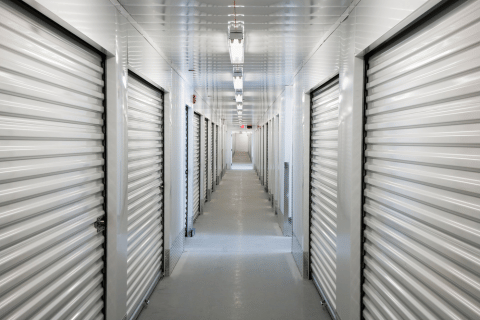
Student Storage Guide: Self Storage for College Dorms
Maximize your dorm space and simplify summer break storage! Learn expert self storage tips for students with The Storage Scanner's back-to-school guide.

 English
Inner-city storage has become one of the fastest-growing segments in Germany’s self-storage market. Cities are getting denser, apartments smaller, and both households and businesses increasingly need flexible space close to home or work. Instead of driving to industrial zones outside the city, people want secure, modern units located in the city centre. Units they can access quickly, at any time, without complexity.
Across Germany, demand for centrally located storage has risen in Berlin, Munich, Hamburg, Frankfurt, and other major urban regions. Providers have responded by opening compact, tech-enabled storage sites inside neighbourhoods, repurposing ground floors, courtyards, and small commercial spaces. These “micro-hubs” bring professional storage directly into the urban fabric: safe, clean, digital, and open 24/7.
Below, we dive into what inner-city storage actually is, how it works, who uses it, what it costs, and where you can find it in Germany. We also explain how The Storage Scanner can help you compare options easily.
Inner-city storage refers to self-storage facilities located within city centers or densely populated urban areas. These are typically “micro-hubs” of storage space that are accessible 24/7, monitored by surveillance, and accessible without on-site staff. In Germany, self-storage facilities generally fall into three categories: premium inner-city locations, drive-up complexes on the outskirts, and container/garage parks in industrial areas. Inner-city storage represents the premium segment – the urban self-storage sites often found in central locations.
What sets inner-city storage apart is the level of convenience and security offered. Facilities in city centers usually provide a high level of comfort: customers benefit from features like 24/7 access, video surveillance, climate-controlled units, and other extra services. In other words, they function as your “storage room around the corner,” providing a safe, clean, and easily reachable space for your belongings in the middle of the city. These advantages make inner-city storage especially attractive for urban residents and businesses who need quick and frequent access to stored items without traveling far.
Opting for an inner-city storage unit comes with several key benefits:
City-center storage facilities are located close to where people live or work. This saves you the time and hassle of driving out to a suburban warehouse. You can often reach your storage unit via a short walk, bike ride, or public transit trip rather than needing a car or truck. This is ideal for city dwellers without personal vehicles.
Most inner-city self-storage providers offer round-the-clock access. You get your own access code or digital key to enter at any time, so you’re not limited by office hours.
Urban storage facilities typically feature strong security measures, which may include CCTV cameras, alarm systems, secure access codes, and on-site personnel or remote monitoring. Units are usually indoors and climate-controlled, protecting your items from weather and temperature extremes. In premium city facilities, you can expect clean, well-lit corridors, smoke detectors, and sometimes even insurance coverage included.
Because competition is high in cities, many providers differentiate with extra services. For example, some inner-city storage companies accept package deliveries on your behalf or offer free use of trolleys and loading zones. A few even have on-site staff during the day to assist customers, lending carts or helping with questions. These extras can make your storage experience smoother.
Ultimately, renting a nearby storage unit helps you free up precious space at home or in the office. Urban apartments and offices are often small and lack storage space. An inner-city storage unit acts as your external storage space, allowing you to declutter your living or working space without getting rid of things permanently.
One important consideration is, as for everything, the cost. Inner-city storage in Germany tends to be more expensive per square meter than storage on the city outskirts – you are paying a premium for central location and convenience. However, prices can vary widely depending on the city and the facility’s features.
Self-storage prices are usually quoted one a monthly basis. According to industry comparisons, a premium inner-city facility in Germany typically charges around €30–€50 per m² per month, whereas a standard storage unit in an industrial area might cost roughly €25 per m². Budget options (like outdoor container parks on the outskirts) can be as low as €8 per m² - but those lack the central location and amenities of inner-city sites. In short, you pay more for a unit downtown, just as city-center housing costs more.
For example, a small 2 m² inner-city storage unit in a Berlin facility might cost around €100 per month, while a larger 4–5 m² room might be about €150-200 per month. This works out to roughly the same range – smaller units often have a higher rate per m² than larger units. This trend holds in Germany too: inner-city facilities with smaller unit sizes tend to have a higher €/m² rent than big suburban warehouses.
It’s also worth noting how costs differ by city. Major German cities have some of the highest self-storage prices in the country. For instance, Munich is one of the priciest markets: an average storage unit in Munich is about €353 per month for ~11 m² (around €32 per m²), which is roughly 60% above the national average price per m². The average in Hamburg is around €242 per month for ~9 m² (≈€26 per m²), ~15–20% above the national. Berlin falls in between – an average unit in Berlin costs roughly €221–€251 per month (around €26–€29 per m²), reflecting high urban land values. By contrast, the estimated national average across all German storage facilities is about €20 per m² (many cheaper facilities outside cities bring the average down). In summary, if you rent inner-city storage in places like Berlin, Hamburg, Munich, or Frankfurt, expect to pay a premium, but you’re paying for convenience and centrality.
Tip: Always compare prices and sizes when choosing a unit. Some providers quote prices per week or for 4-week periods (be mindful of those tricks), and some include insurance or 24/7 access in the price while others add them as extras. Use a comparison tool like The Storage Scanner to find a unit that fits your budget and needs.
The short answer: virtually every major city in Germany offers inner-city self-storage options, and the trend is growing. Self-storage has moved from a niche to mainstream in Germany over the past decade, especially as urban populations have grown and living spaces shrunk.
Unsurprisingly, the largest concentration of facilities is in the biggest cities. Berlin, the capital, has the most: over 80 facilities and counting in the wider Berlin area as of 2025 (some data even shows around 100+ in a 25 km radius). Other top cities include Munich (around 40–50 facilities, and the highest prices), Hamburg (around 36 facilities, serving a dense population of 1.8 million), Cologne, Frankfurt, Stuttgart, Düsseldorf, Leipzig, Dortmund, and Essen. These roughly correspond to Germany’s ten largest metropolitan areas, all of which have multiple self-storage centers. In these big cities, you’ll often find a mix of large multi-story storage warehouses (e.g. converted industrial buildings) and smaller street-level “mini storage” sites embedded in neighborhoods.
Even mid-sized cities and regional hubs are catching up. University towns and economic centers like Hanover, Nuremberg, Bremen, and Dresden also host several storage facilities – often including at least multiple inner-city location. Essentially, wherever a significant number of people live in apartments (or a lot of small businesses operate), the demand for nearby storage exists. So, whether you’re in Berlin’s Kreuzberg or in downtown Frankfurt, chances are there’s a storage facility not far away.
A few major companies operate across many cities, providing inner-city storage nationwide (more on providers in the next section). But you’ll also find local independent operators in each city. This abundance of options is great for consumers, but it can be tricky to navigate – which is why using a comparison platform or directory can help identify what’s available in your area quickly.
One might think storage units are only for people who are moving homes, but in reality inner-city storage serves a wide range of users – essentially anyone who needs extra space in an urban environment. Here are some of the main groups and scenarios:
If you live in a city apartment with no basement or limited closet space, a nearby storage unit can be a good alternative. City residents use storage for seasonal items (winter gear, sports equipment), archives of documents, luggage, or items like bikes when not in use. Inner-city self storage is an easy way to make space in a small flat.
Students, interns, or expats living in Germany’s cities often have transient lifestyles. Inner-city storage is perfect when you’re between apartments, going home for the summer, or on an exchange semester. Rather than hauling everything with you or paying for a bigger apartment, you can stash your stuff in a secure unit for a few months. It’s also popular with expats who might leave some household items in storage if they frequently travel or split time between countries.
Companies also rely more and more on self-storage. Entrepreneurs, startups, and small businesses use storage units as affordable mini-warehouses for inventory, samples, or equipment. For example, an online retail shop might keep their products in a storage unit downtown for easy packing and shipping. Tradespeople (plumbers, contractors) might store tools and supplies. Even larger firms rent units for archiving files or storing office furniture. Inner-city storage can be more cost-effective than renting additional commercial space, and it’s conveniently located near the business. Many providers offer business-friendly solutions like delivery acceptance or logistics support to cater to this group.
If you’re in the process of moving, downsizing, or renovating your home, an inner-city storage unit can hold your furniture and boxes temporarily. During a renovation, for instance, you might clear out several rooms into storage to protect your belongings from dust and damage. Likewise, those who are between homes (with a gap before your new lease or closing date) often put everything in storage for a few weeks. Having the storage site nearby makes it easy to shuffle items in and out as needed, without long drives to warehouses. It’s essentially a flexible extension of your home during transitions.
Ultimately, inner-city storage is for anyone who wants a convenient, secure solution to their space problems. This could include hobbyists (storing musical instruments or collection items), frequent travellers (keeping personal items safe while abroad), or families who simply want to declutter. In short – if you have stuff you don’t have room for, and you want it nearby and secure, inner-city storage is for you.
When discussing inner-city storage in Germany, one name that stands out is Storebox. Storebox is often cited as the market leader in urban self-storage – it’s known as Europe’s first fully digitalized self-storage network, with locations in Germany, Austria, Switzerland, the Netherlands, Belgium, and Luxembourg. The company was founded in 2015 in Vienna and expanded rapidly; as of 2025 it operates over 240 storage locations in Germany, making it the single largest player in the country’s inner-city storage scene. Across Europe, Storebox has grown to roughly 350+ locations and continues to scale up.
So, what makes Storebox special? In a nutshell, it’s a “storage next door” concept focused on urban convenience and tech-driven service. All Storebox facilities are located in easily accessible city spots – think ground-floor retail spaces or parking garages converted into small storage centers right in your neighborhood. You can book a storage easily via The Storage Scanner, without any paperwork. Once you’ve reserved a unit, you receive an access code to unlock the front door and your unit, so no keys and no need to meet staff. Every location is accessible 24/7 and monitored by cameras, and units come equipped with smart sensor technology (e.g. temperature and humidity sensors) to ensure a safe environment for your items. In essence, Storebox offers a fully automated, high-security storage experience.
Another strength of Storebox is its dense network. With so many locations, they truly have “your storage around the corner” in many cities. For example, Storebox has dozens of sites across Berlin and other major German cities. This density not only means you’re likely to find a facility close by, but also that you can choose the exact size you need. Storebox units (often called “storage cabins”) range from tiny 1 m² lockers to mid-sized rooms around 5–7 m². Because the units are smaller on average than some traditional self storage locations, customers aren’t paying for unused space – you rent just as many square meters as you truly need.
Storebox’s innovative approach extends to business logistics as well. They pitch their network of city storage hubs as a solution for last-mile logistics: businesses can use them as mini-warehouses or distribution points inside the city, cutting down delivery times. In fact, Storebox’s founders have a vision of building “the largest and most innovative urban logistics network in Europe”, leveraging these storage sites for more than just personal clutter.
If you’re considering inner-city storage in Germany, Storebox is certainly a provider to check out. The fact that Storebox is open 24/7, requires no long-term contracts, and has its facilities well-maintained and secure has made it very popular in cities. It’s no surprise that Storebox now boasts over 240 sites across Germany and operates in six countries, proving the demand for inner-city storage is significant. Other notable companies in Germany’s self storage market include MyPlace, Shurgard, and Safestore, but Storebox has differentiated itself by being fully digital and having a dense urban coverage.
With so many storage facilities spread across different cities and various providers like Storebox, how do you easily find the best option for your needs? This is where The Storage Scanner can help you. The Storage Scanner is a free and independent comparison platform for self-storage units across Europe, including Germany’s inner-city storage locations. Our mission is to make it fast, transparent, and 100% free for you to discover and compare storage options near you by price, size, location and other features.
Using The Storage Scanner, you can easily search thousands of storage providers in one place. In fact, the platform lists virtually all facilities. From both big brands like Storebox, Shurgard, and MyPlace, to independent local providers, giving you the most complete overview of the market. You can enter your address, city or postcode and filter results by distance, unit size, monthly price, features, and more. Instead of visiting multiple websites or making phone calls, The Storage Scanner shows you which inner-city storage facilities are available in your area and what they charge, so you can get the best storage deal.
Maximize your dorm space and simplify summer break storage! Learn expert self storage tips for students with The Storage Scanner's back-to-school guide.
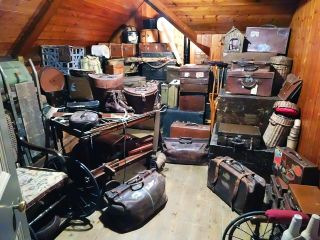
Are your stored belongings surviving the summer? Discover why hot attics destroy wood, electronics, and clothing, and how climate-controlled self storage protec

Struggling with the European heatwave? Discover how decluttering to reduce heat stress at home can naturally cool your home.
Looking for cheap self storage? Whether you need personal storage for a move or business storage for inventory, The Storage Scanner compares thousands of storage units near you. Find the best storage space and rent storage at the lowest price today!
















© 2026 The Storage Scanner, all rights reserved