Locker Storage
Written by the experts at The Storage Scanner. Our team evaluates hundreds of storage facilities to bring you this unbiased guide to renting lockers, helping you avoid hidden fees, pack efficiently, and choose the right tier for your items.
Definition of lockers
What is a storage locker? A storage locker is a small, lockable storage space, typically around 1 m² in floor area and often up to roughly 1-3 m³ in volume. Lockers are designed for compact storage needs, such as boxes, suitcases, documents, sports gear, or small business materials you want to keep out of your home or office.
Lockers are usually part of a managed facility or access-controlled location. They are chosen for simplicity: a fixed small size, quick move-in, and easy access without committing to a larger unit. Many people use lockers as a “buffer space' for everyday overflow rather than long-term household storage.
For who are lockers?
When a locker is the right choice (and when it isn’t)
Best for:
- Storing suitcases, seasonal clothing, sports gear, baby items, or boxed keepsakes when you only need a little extra space.
- Students needing short-term storage for boxes and belongings during housing gaps, internships, or travel.
- Small businesses storing documents, samples, marketing materials, or lightweight stock in a tidy, secure space.
- People who want a convenient overflow option without paying for a larger unit they won’t fully use.
Not ideal if:
- You need to store furniture, appliances, or bulky household items that require more floor space and height.
- You expect to access large items with a vehicle and need drive-up loading at the door.
- You need workshop use, vehicle stalling, or any activity beyond quiet storage.
- You require strict climate control for sensitive collectibles, artwork, or high-value electronics.
How lockers work
Lockers are simple, but facilities differ in access and rules. The process is usually quick because the size is fixed and the setup is standardised.
- Compare options: On The Storage Scanner you select a location and compare available lockers, access hours, and pricing.
- Request a locker: You submit your request with a preferred start date and your contact details, and describe what you plan to store.
- Provider confirmation: The provider confirms availability and explains access methods, building rules, and any ID requirements.
- Contract and access: You sign directly with the provider and receive your access credentials, such as a code, card, fob, or app entry.
- Billing and move-out: You pay on the agreed cycle, follow notice rules, then empty the locker and return access items.
The key benefit of lockers is efficiency. You get a small, secure space for compact items, without the cost and planning of a larger unit.
Capacity and typical use-cases of lockers
Because lockers are usually around 1 m² and up to roughly 1-3 m³, the best way to think about capacity is “stackable volume.' Uniform boxes, sealed tubs, and soft bags help you use the height efficiently. Shape and door size matter immensely. A tall, narrow locker can fit more stacked boxes than a low, wide locker, but if the door frame is narrow, a large hard-shell suitcase might not fit through the opening even if the internal volume is sufficient.
Lockers are often stacked in tiers (upper and lower lockers). Lower lockers are ideal for heavy archive boxes or tool cases that are difficult to lift. Upper lockers often require you to lift items above your waist or use a rolling step ladder provided by the facility. If you have a bad back or heavy items, specifically request a bottom-tier locker.
Lockers are ideal for items you can carry by hand. If you plan to store fragile items, pack them so they do not shift when stacked. Keep heavier boxes at the bottom and label containers by category rather than writing high-value contents on the outside.
Access and convenience
Locker access varies widely. Some locations offer extended hours, while others operate within set daily windows. Also check the difference between access hours and office hours, because you may be able to enter the building even when staff are not present.
Think about how you will move items in. Lockers are usually designed for hand-carried loads, and are often located down indoor corridors or on upper floors. Parking proximity, short walking distances, and lifts matter more here than drive-up access. Always check whether the facility provides trolleys or flatbed carts, as carrying multiple heavy boxes by hand gets exhausting quickly.
Because locker sizes are small, convenience is often about location. A locker near your home, university, or daily commute is usually worth a slightly higher price to save time on frequent trips.
Security and protection of goods
Most locker sites rely on building-level security such as CCTV, controlled entry, and monitored corridors. Individual lockers typically have a built-in lock or a latch designed for a padlock. Padlock sizing is crucial here. While large storage units take heavy-duty disc locks, locker latches are often smaller. A standard brass or combination padlock with a 5mm to 6mm shackle is usually the perfect fit. Buying your own lock in advance can save you from paying marked-up prices at the facility reception.
Your own habits still matter. Keep valuables out of sight when loading, avoid advertising expensive contents on labels, and keep photos of important items. Use sturdy boxes, tape seams well, and avoid overloading stacked items so boxes do not collapse.
Insurance may be included, optional, or required depending on the provider. Check covered risks and exclusions, especially for electronics, documents, or business stock. If you store important records, consider keeping digital backups as well.
Climate and item suitability
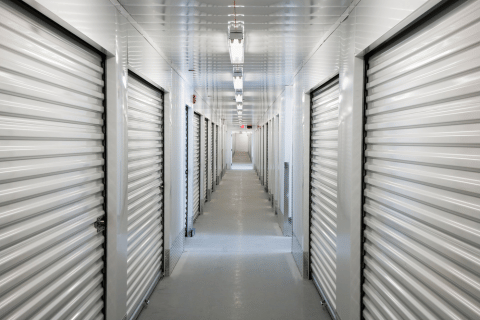
Locker conditions depend on the building type. Some lockers are in indoor corridors with relatively stable temperatures, while others can be in less insulated basements or mezzanines. Humidity and lack of airflow are the main risks. Because lockers are small, enclosed metal spaces, air does not circulate well.
To prevent musty smells and moisture issues:
- Store items 100% dry: Never store damp sports gear, wet tents, or freshly washed (but slightly damp) clothing.
- Use sealed tubs: Plastic bins are much safer for textiles and paperwork than cardboard boxes.
- Add moisture absorbers: Tossing a few silica gel packets or a small desiccant tub into the locker is an inexpensive way to protect your goods during long stays.
As with most storage, prohibited items often include perishable food, fuels, chemicals, fireworks, and anything that can leak or attract pests. Because lockers are inside shared buildings, providers are especially strict about these rules.
Costs and pricing model
Locker pricing is usually a monthly rent based on location and demand. Because the size is fixed, you mainly pay for convenience: a central location, longer access hours, and a secure building can all increase the price.
Be aware of upfront costs. Some providers charge a deposit or a mandatory administration fee. If you do not bring an appropriate lock, you may be required to buy one on-site. Insurance is often an add-on, and mandatory coverage levels can increase your total monthly bill.
For short stays, pay attention to billing cycles and notice rules. A low monthly price is less attractive if a strict 30-day notice period forces you to pay for an extra cycle you don't need.
Contracts and practical pitfalls
Locker agreements are often straightforward, but timing rules still matter. Check minimum stay, notice period, and whether billing is monthly or four-weekly. If you only need a locker for a short period, align move-out with the billing date.
Access rules can be stricter than expected. Some locations limit access at night, require appointments for your very first move-in day, or restrict how long you can stay on-site sorting through your things. If you plan to visit often, confirm these practical rules before signing.
Also check item restrictions. Even if an item seems harmless, some providers limit batteries (like e-bike batteries), liquids, or certain business materials due to fire safety regulations.
Choosing a provider
Checklist: how to compare lockers
- Location and access: Distance, entry hours, weekend rules, trolley availability, and lifts.
- Locker fit: Internal dimensions, usable height, door opening size, and whether it is a bottom or top-tier unit.
- Total cost: Rent plus admin fees, deposit, lock requirements, mandatory insurance, and access card charges.
- Security: CCTV, controlled entry, lighting, and padlock shackle size limits.
- Conditions: Cleanliness, ventilation, signs of damp, and climate stability.
- Rules and restrictions: Prohibited items, limits on batteries/liquids, and move-out procedures.
- Transparency: Clear dimensions, photos, and written terms for access and notice periods.
Use this checklist while comparing lockers on The Storage Scanner. Because locker sizes are similar, location, access rules, and total cost usually decide which option fits best.
About this guide
This guide focuses on lockers as a compact storage solution. We structured it around the factors people compare when choosing small storage: access convenience, upper vs. lower tier loading, security, climate risks, and contract timing.
We considered typical locker uses such as suitcase storage, student transitions, document storage, and small business materials. We also highlighted practical packing methods because lockers heavily reward efficient stacking and clear organisation.
We keep the guide updated by monitoring how providers describe access, pricing components, and usage restrictions for lockers. At The Storage Scanner we compare storage options across locations, sizes, and features, so users can evaluate choices with consistent information. The goal of this guide is to help you get familiar with lockers and avoid the common pitfalls that create unexpected cost or inconvenience.
FAQs
How long can I rent a locker?
Lockers can often be rented for short or long periods, depending on the provider. Some offer month-to-month agreements, while others have a minimum stay and a notice period. Check billing dates carefully if you only need short-term storage to avoid paying for an unused month.
What can I typically fit in a locker?
Most lockers (approx. 1 m³) are designed for compact items such as 8-10 standard archive boxes, a few large suitcases, sports gear, seasonal clothing, and small business materials. Because volume is limited and doors can be narrow, lockers are not suitable for furniture or large appliances.
Are lower lockers better than upper lockers?
If you have heavy items like dense document boxes or tool cases, lower lockers are much better because you don't have to lift heavy weights above your waist. Upper lockers are fine for lighter items like clothing or suitcases, but may require using a step ladder.
Do I need insurance for a locker?
Insurance may be included, optional, or required. Your home or business insurance might cover off-site storage, but coverage limits and exclusions are common. Check what is covered, the insured value, and which item types are excluded, especially for electronics or business stock.
Can I access my locker whenever I want?
Access depends on the location’s access hours and how entry is managed. Some sites offer extended 24/7 hours, while others have fixed daily access windows. Confirm how access works, such as keypad, card, fob, or app entry, and whether office hours are separate from access hours.
What can’t I store in a locker?
Rules vary, but common restrictions include perishable food, plants, animals, illegal goods, fuels, fireworks, chemicals, and anything that can leak, smell, or attract pests. Because lockers are often in shared buildings, providers may also strictly ban e-bike batteries and flammable liquids.
Do locker prices increase over time?
They can, especially for longer stays. Some contracts include indexation or periodic rent adjustments. Check how often increases can happen, what notice you receive, and whether increases can apply during a minimum term.
Is a locker suitable for documents and archives?
It can be, if the space is dry and items are packed properly. Because small lockers lack airflow, use plastic document boxes rather than cardboard, keep papers off the floor, and use moisture absorbers for longer stays. Ensure the facility has a stable indoor climate.
Do I need to clean the locker before moving out?
Most providers expect the locker to be empty and left tidy. That usually means removing all rubbish, sweeping out dust, and leaving the space in reasonable condition. Taking photos at move-out and confirming the end date and access return process can help secure your deposit return.
Glossary
Key locker terms explained
- Usable volume: The practical space available for stacking boxes, often more relevant than floor area for lockers.
- Upper/Lower Tier: Lockers are often stacked; lower tiers are at ground level, while upper tiers require lifting items higher.
- Access control: The system used to enter the site, such as keypad, app, card, or fob.
- Billing cycle: The schedule used for rent charging, such as monthly or four-weekly, affecting move-out timing.
- Notice period: The time you must give before ending your rental, often linked to the billing date.
- Deposit: A refundable amount held as security, sometimes returned after move-out if terms are met.
- Moisture absorber: Desiccant products (like silica gel) used to reduce humidity in small enclosed spaces during storage.
- Prohibited items: Goods not allowed in storage due to safety, hygiene, or legal reasons.
Other Storage Types

We’re Here to Help You
The Storage Scanner is dedicated to offering the best support and expert advice in the industry. Our team of storage specialists is here to help you every step of the way, from comparing local facilities to booking the perfect unit for your needs.
We take pride in our 4.8/5 customer rating of 85 Google reviews and our commitment to making your search for self storage simple, transparent, and stress-free. Whether you need help over the phone or online, we’ll ensure you find the right space at the right price.
Find Storage Units Near Me
Looking for cheap self storage? Whether you need personal storage for a move or business storage for inventory, The Storage Scanner compares thousands of storage units near you. Find the best storage space and rent storage at the lowest price today!