Self Storage Unit Amenities Guide
Written by the The Storage Scanner team. We compare self storage facilities across Europe and the UK and help users evaluate more than just price and size. Amenities can make a major difference in convenience, protection, access, and the overall quality of your storage experience. This guide explains the most important storage unit amenities and how to choose the ones that actually matter for your use-case.
When people search for self storage, they often begin with two questions: “What size do I need?' and “What does it cost?' Those are important, but there is a third question that often matters just as much in practice: what amenities does the facility offer?
The right amenities can make move-in easier, reduce the risk of damage, improve access to your belongings, save time, and lower stress. The wrong facility setup can create frustration even if the price looks attractive on paper. For example, a low-cost unit may become inconvenient if there is no lift, no loading area, limited access hours, or no trolleys for moving heavy items. In contrast, a slightly more expensive facility may offer amenities that make the whole process smoother and safer.
This guide is a broad, practical, and high-quality overview of storage unit amenities in Europe. It explains what the most common amenities mean, when they matter, what questions to ask, and how to compare facilities for household, student, and business storage. It also includes a detailed FAQ to help users make confident decisions.
Why Storage Unit Amenities Matter
Amenity lists are not just marketing extras. In many cases, they directly affect:
- Protection of your belongings (for example climate control, pest control, building quality)
- Convenience during move-in and move-out (drive-up access, loading dock, trolleys, lifts)
- Daily usability if you visit regularly (24/7 access, access hours, online account management)
- Operational efficiency for business users (delivery acceptance, mail/package handling, loading support)
- Security and oversight (electronic gate access, on-site staff, CCTV-related amenities)
In other words, amenities are part of the real value of a storage facility. Two units of the same size can offer very different experiences depending on what is available on-site.
At The Storage Scanner, we recommend matching amenities to your use-case rather than simply choosing the facility with the longest feature list. A student storing boxes for summer may need very different amenities than a business storing stock or a family storing furniture during renovations.
What Are Storage Unit Amenities?
Storage unit amenities are the features and services a facility offers in addition to the basic storage space itself. Some amenities relate to the individual unit (for example climate control or electricity in selected units), while others relate to the facility as a whole (for example access systems, lifts, loading docks, on-site staff, package acceptance, or opening hours).
Some amenities are essential for specific users. Others are optional but highly useful. The key is understanding the difference between:
- Must-have amenities for your storage type
- Nice-to-have amenities that improve convenience
- Marketing labels that sound useful but require clarification
This guide helps you sort those categories clearly.
Climate Control: What It Is and When It Matters
Climate control is one of the most commonly discussed storage amenities, and for good reason. In simple terms, climate-controlled self storage helps protect belongings from damaging temperature swings and, in some facilities, humidity-related risks as well.
Definitions can vary by facility, so always confirm what the provider means by “climate control.' In Europe, facilities may use terms such as:
- Climate controlled
- Temperature controlled
- Heated storage
- Ventilated storage
- Humidity-managed (less common, but highly valuable for some items)
Some facilities maintain a broadly stable indoor environment. Others may only provide heating in colder months or basic air circulation. That is why the label alone is not enough. Ask what is actually controlled and how consistent conditions are across the year.
Why Climate Control Is Important
Climate control is not only about comfort. It is about protecting the condition of your belongings over time. Repeated temperature changes and moisture fluctuations can affect many materials, especially during longer storage periods.
Climate control can be especially useful for:
- Wood furniture and antiques
- Leather goods
- Important documents and archives
- Photos and printed materials
- Electronics and media equipment
- Musical instruments
- Artwork and collectibles
- Textiles and clothing
In much of Europe, seasonal humidity and temperature variation can be more important than extreme heat. If you are storing sensitive items for several months, especially in a basement-like environment or older building, asking about indoor climate conditions is a smart move.
Do You Need Climate-Controlled Storage?
You may not need climate control for every storage project. For example, if you are storing robust household items for a short period and packing them well, a standard unit may be perfectly suitable. But if you are storing sensitive or valuable items, climate control may be worth the extra cost.
Climate control is often worth considering if:
- You are storing for several months or longer
- Your items are sensitive to moisture or temperature shifts
- You are storing paperwork, electronics, instruments, or antiques
- You want lower risk of warping, cracking, mould risk, or material degradation
Ask the facility: Is the unit heated, ventilated, or fully climate controlled? Is control applied to the whole building or only selected areas? Are there any seasonal variations?
Drive-Up Access
Drive-up access means you can bring your car, van, or moving vehicle directly to the unit door (usually for outdoor-access units). This can make a major difference during move-in and move-out, especially when storing furniture, appliances, boxes, tools, or business stock.
In Europe, drive-up units may be less common in dense city centres and more common in suburban or industrial locations. Where available, they can be one of the most practical amenities for users who value convenience and minimal carrying distance.
Why Drive-Up Access Matters
- Shorter distance from vehicle to unit
- Less lifting through hallways or lifts
- Faster loading and unloading
- Especially useful for heavy, bulky, or awkward items
- Practical for business users who collect or drop items regularly
Drive-up access is particularly useful for tradespeople, retailers, e-commerce users, and households moving large furniture. It can also reduce the time you need to rent a moving vehicle, which may offset a higher unit cost.
Things to Check About Drive-Up Units
- Can larger vans or moving trucks easily access the unit lane?
- Are there width/height restrictions at the site entrance?
- Is the area sheltered or exposed to weather?
- Are there time restrictions for vehicle access?
- Is the surface flat and easy to use with trolleys?
Drive-up access is a convenience amenity, but for some users it becomes a true efficiency feature that changes the whole storage experience.
Indoor vs Outdoor Storage Units
One of the most important facility choices is whether your unit is indoor or outdoor-access. This is not just a layout preference. It affects accessibility, protection, and amenity options.
Indoor Storage Units
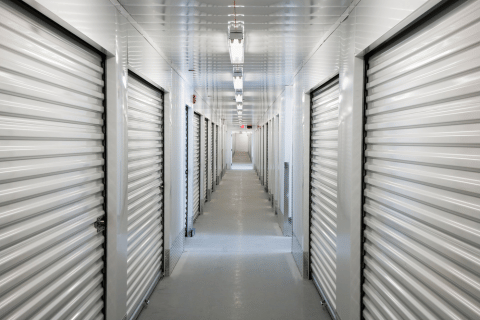
An indoor unit is located inside a building. You typically access it through a main entrance, reception area, internal corridor, and sometimes a lift. Indoor units are often associated with more controlled environments and are more likely to be available with climate-related amenities.
Common advantages of indoor units:
- Better protection from rain and weather during storage
- More likely to offer climate control or heating
- Often part of modern multi-floor facilities with lifts and trolleys
- Can feel more secure due to layered building access
Possible drawbacks:
- Longer carrying distance from vehicle to unit
- Dependence on lifts or corridors for larger items
- Move-in may take longer without loading support
Outdoor-Access Storage Units
An outdoor unit is usually accessed directly from outside, often in a row of garage-style units. These are often preferred for easy loading and unloading and may be ideal for robust items, tools, materials, or short-term access convenience.
Common advantages of outdoor units:
- Often compatible with drive-up access
- Fast loading and unloading
- Very practical for heavy and bulky items
- Useful for frequent visits
Possible drawbacks:
- Usually less likely to offer climate control
- More exposure during loading in poor weather
- May have different temperature conditions than indoor units
Neither option is universally “better.' The right choice depends on your inventory and how often you need access.
On-Site Employees
An on-site manager or on-site employees are often listed as a facility amenity, and for good reason. People sometimes think of this as only an administrative feature, but staff presence affects far more than paperwork.
On-site employees can improve:
- Customer support (helping you choose a unit, understand access rules, and solve problems)
- Operational quality (site checks, maintenance awareness, move-in coordination)
- Security oversight (monitoring activity, identifying issues, responding to questions)
- Move-in experience (explaining lifts, trolleys, loading procedures, and access systems)
In some facilities, the manager may be present during office hours only. In others, there may be a broader staff team during business hours. The key is understanding when staff are available and what support they actually provide.
If you are a first-time self storage user, a well-run facility with professional staff can make the entire process easier and reduce mistakes.
Roll-Up Doors
A roll-up door works much like a garage door: it rolls upward rather than opening outward like a hinged door. This is a common feature in many storage units, especially outdoor-access units, but it can also appear in certain indoor unit designs.
Why Roll-Up Doors Can Be Useful
- They do not swing outward into traffic areas
- They can be convenient for frequent access
- They may work well for drive-up loading
- They often suit wider openings for furniture and boxes
However, the door type is only one part of usability. You should also check the door opening width and height, because that determines whether large items can be moved in without difficulty.
If you are storing wide furniture, appliances, or business equipment, ask for the unit opening dimensions, not just the overall unit size.
Office Hours vs Access Hours: A Crucial Difference Many Users Miss
This is one of the most important practical distinctions in self storage, and many new renters overlook it.
Office Hours
Office hours are the times when facility staff are available to help with:
- New rentals and paperwork
- Payments and billing questions
- Unit viewings
- Move-in support
- General customer service
Access Hours
Access hours are the times when tenants can physically enter the facility and access their units. These hours may be longer than office hours and can vary significantly between facilities.
For example, a facility may have office hours from 09:00 to 17:00 but access hours from 06:00 to 22:00. Another facility may offer 24/7 access for approved tenants.
Why This Matters
If you choose a facility based on price only and later discover that access hours do not fit your schedule, the unit may become inconvenient. This matters especially for:
- Business users needing early or late access
- People moving outside standard office hours
- Travellers and shift workers
- Students with irregular schedules
Always check both office hours and access hours before booking, and ask whether access hours differ by unit type or building area.
24-Hour Access: Who Really Needs It?
24-hour access (or 24/7 access) means you can access your storage unit at any time, including when the office is closed. This can be a valuable amenity, but it is not necessary for everyone.
Who Benefits Most From 24-Hour Access?
- Businesses with early deliveries or late collections
- Tradespeople working outside normal hours
- Users with unpredictable schedules
- People in the middle of a move who need flexibility
For many household users, extended access hours (for example early morning to late evening) may be more than enough. If 24-hour access comes at a higher price, compare whether you will actually use it.
Questions to Ask About 24-Hour Access
- Is 24-hour access available for all units or only selected units?
- Is there an extra charge or approval process?
- Are there restrictions on vehicle access at night?
- How is after-hours access controlled and monitored?
24-hour access is a strong convenience amenity, but the best choice depends on your real usage pattern.
Electronic Gate Access and Entrance Systems
Electronic gate access or electronic entrance control is a common facility amenity that helps manage who enters the site or building. In modern European facilities, access may be handled via:
- PIN code
- Key card
- Fob
- Mobile app
- Reception-controlled entry (in some buildings)
This amenity is often listed for security reasons, but it also improves convenience. A reliable electronic access system can make entry faster and more organized, especially at busy facilities.
For users, it is useful to ask:
- How access credentials are issued
- What to do if a code or fob stops working
- Whether access can be managed remotely via app
- Whether different access hours apply to different areas
Electronic access is often a sign of a professionally managed facility, but the user experience depends on how well the system is maintained and supported.
Loading Docks, Loading Bays, and Move-In Infrastructure
One of the most underrated groups of storage unit amenities is move-in infrastructure. A facility may have good unit pricing, but if move-in logistics are poor, your experience can become slow, tiring, and frustrating.
Loading Dock / Loading Bay
A loading dock or loading bay is a designated area where you can unload from a van or truck more efficiently, often with easier access to the building entrance. This is especially helpful in urban or indoor facilities where you cannot drive directly to the unit.
Why it matters:
- Safer unloading area
- Better access for larger vehicles
- Reduced carrying distance to lifts or corridors
- Faster move-in and move-out process
If you are storing furniture, business stock, or many boxes, a loading area can be one of the most useful amenities on the entire site.
Handcarts, Trolleys, and Dollies
Facilities that provide handcarts, dollies, or trolleys can save you a lot of effort. These are especially useful in indoor facilities with corridors and lifts.
Ask whether trolleys are:
- Free to use
- Available during all access hours or only office hours
- Usually in sufficient quantity at busy times
This may sound like a small detail, but on move-in day it can make a major difference.
Lifts (Elevators)
If your unit is on an upper floor, lift access is critical. But not all lifts are equally practical. Check:
- Lift dimensions
- Weight limits
- Whether trolleys fit inside easily
- Whether lift access is available during all access hours
A facility can technically have a lift and still be awkward for large furniture if the lift is too small.
Mail and Package Acceptance
Some facilities offer mail and package acceptance (or delivery acceptance) for tenants. This can be extremely useful for businesses, e-commerce users, tradespeople, and occasionally for people in transition who need practical logistics support.
However, this service varies widely. Some facilities accept parcels only during office hours. Others may sign for deliveries within size or quantity limits. Some may not offer it at all.
Who Benefits Most?
- Small businesses storing stock
- E-commerce sellers managing inbound inventory
- Tradespeople receiving supplies
- Project-based users needing occasional deliveries
Questions to Ask
- Do you accept parcels or pallets for tenants?
- Are there size/weight limits?
- Are deliveries accepted only during office hours?
- Is there an extra fee for this service?
- Do you notify tenants when deliveries arrive?
If this amenity matters to you, confirm the details in advance rather than assuming it is included.
Online Account Management, Auto-Pay, and Remote Paperwork
Digital amenities are increasingly important in modern self storage, especially in Europe where users often compare and book online before visiting in person.
Online Account Management
This usually means you can manage your storage account online, for example:
- View invoices
- Make payments
- Update personal details
- Manage billing preferences
- Review contract information
For many users, this is a convenience feature. For business users, it can also improve administration and reduce time spent on paperwork.
Auto-Pay
Auto-pay helps reduce the risk of missed payments and can simplify budgeting. It is especially useful for long-term storage users and businesses with recurring storage costs.
Before enabling auto-pay, check:
- Billing date
- Notice period for price changes
- How to update payment method
- What happens if a payment fails
Remote Paperwork / Digital Move-In
Some facilities allow contracts and onboarding steps to be completed remotely. This can make move-in faster and more convenient, especially if you are arranging storage while moving between cities or countries.
Remote paperwork can be particularly valuable for:
- Relocations
- Student moves
- Business users booking storage in another city
- Time-sensitive moves
Moving Supplies for Sale and Other Practical Convenience Amenities
Many facilities offer additional amenities such as moving supplies for sale. These may include:
- Boxes
- Tape
- Bubble wrap
- Mattress covers
- Furniture covers
- Padlocks (including disc locks)
- Labels and markers
This can be very helpful if you run out of supplies on move-in day, but prices may be higher than buying in advance. For planned moves, it is usually best to prepare your own supplies and treat facility sales as a backup option.
Other convenience amenities may include:
- Reception waiting area
- Parking for customers
- Toilets on-site
- Packaging waste disposal policies (varies)
- Basic business support services (less common, but possible in premium facilities)
Not every facility needs all of these, but they can contribute to a better overall customer experience.
Pest Control
Pest control is not always highlighted in listings, but it can be an important amenity, particularly for long-term storage and for facilities in certain locations or building types.
Pest control practices vary by facility. Some use regular preventive treatment and inspections, while others may apply measures as needed. As a renter, you should not assume the same level of pest management everywhere.
Why It Matters
- Protects textiles, cardboard, and stored goods
- Supports cleaner storage conditions
- Reduces risk of contamination issues for business stock
Tenant Best Practices Still Matter
Even if a facility has pest control, tenants should store responsibly:
- Do not store food (unless explicitly allowed and appropriate)
- Use sealed boxes where practical
- Keep items clean and dry before storage
- Avoid leaving loose packaging materials exposed
If pest control is important to you, ask the facility what preventive measures they use and how often they are carried out.
Electricity in Storage Units
Most standard self storage units in Europe do not include electricity or electrical outlets. However, some facilities offer units with power as a premium feature or for specific commercial/storage use-cases.
If a unit has electricity, ask for clear rules. Many facilities restrict how it can be used for safety and insurance reasons.
Possible Use-Cases (Subject to Facility Rules)
- Temporary lighting while accessing stored items
- Certain business-related storage workflows (where permitted)
- Specialized storage setups in premium units (varies widely)
Important Questions to Ask
- Is electricity included in the rent or billed separately?
- What is the permitted use?
- Are extension leads or equipment restricted?
- Are there safety requirements or inspections?
Electricity can be a useful amenity for some users, but it is uncommon and should never be assumed.
Heated, Air-Cooled, Ventilated, and Climate-Controlled
Facilities use different terms for environmental amenities, and definitions are not always standardized. This can create confusion for users comparing storage options across countries and providers.
In general (but always confirm with the facility):
- Climate-controlled: A more consistently managed environment, often with temperature regulation and sometimes humidity management.
- Heated storage: The building or unit receives heating, typically to reduce cold-weather risk but not necessarily maintain a strict year-round range.
- Air-cooled / cooled: Cooling is provided, but not necessarily full climate control with tightly managed thresholds.
- Ventilated storage: Air circulation is improved, but temperature/humidity may not be tightly controlled.
Because terminology varies, the best approach is simple: ask what conditions are maintained and what items the facility recommends those units for.
How to Choose the Right Amenities for Your Use-Case
The best way to evaluate storage unit amenities is to match them to your actual needs. Below is a practical guide for common use-cases in Europe.
Household Storage (Moving, Renovations, Decluttering)
Most useful amenities:
- Good access hours (or 24/7 if needed)
- Loading bay or drive-up access
- Trolleys/dollies
- Lift access (for indoor upper-floor units)
- On-site staff
- Climate control (for sensitive furniture/documents)
Typical priority: convenience + protection.
Student Storage
Most useful amenities:
- Flexible access hours
- Easy move-in support (trolleys, lift, loading area)
- Digital paperwork / online payments
- On-site staff for first-time users
- Climate control for electronics/documents (if storing longer term)
Typical priority: affordability + simplicity + access.
Business Storage
Most useful amenities:
- 24/7 access or long access hours
- Drive-up access or loading dock
- Mail/package acceptance
- Online account management and auto-pay
- Electronic gate access
- On-site staff during office hours
- Climate control (for stock/documents/equipment where needed)
Typical priority: efficiency + logistics + reliability.
Questions to Ask a Storage Facility About Amenities Before Booking
When comparing facilities, asking the right questions helps you avoid surprises. Here is a practical checklist:
- What are your access hours and how do they differ from office hours?
- Do you offer 24/7 access, and is it available for all units?
- Is the unit indoor or outdoor-access?
- Is drive-up access available?
- Do you have a loading bay/dock for vans or trucks?
- Are trolleys/dollies available during all access hours?
- Is there a lift, and what are its dimensions?
- What does your climate control mean in practice?
- Do you offer heated or ventilated units?
- Can you accept deliveries or packages for tenants?
- Do you offer online account management and auto-pay?
- Are moving supplies sold on-site?
- Do any units have electricity?
- What support is available from on-site employees?
These questions help you compare like-for-like and choose a facility based on real usability, not just headline pricing.
Common Mistakes People Make When Evaluating Amenities
Many storage users only realize the importance of amenities after they move in. Here are common mistakes to avoid:
- Focusing only on price and size: A cheaper unit may cost more in time, transport effort, or inconvenience.
- Ignoring access hours: The facility may not fit your schedule.
- Assuming climate control is standardized: Always ask what it actually means at that facility.
- Not checking move-in logistics: No lift, no trolleys, and no loading area can make a move much harder.
- Assuming package acceptance is included: This varies greatly and may have limits.
- Overpaying for amenities you will not use: Match amenities to your real storage behavior.
The best choice is not the facility with the most amenities. It is the facility with the right amenities for your situation.
Storage Unit Amenities FAQs
What is climate control in self storage?
Climate control is an amenity that helps maintain more stable storage conditions, usually by regulating temperature and sometimes humidity. Definitions vary by facility, so it is important to ask exactly what is controlled and for which unit types.
Do I need climate-controlled storage in Europe?
It depends on what you are storing and for how long. Climate control is often worth considering for sensitive items such as wood furniture, documents, electronics, instruments, photos, and textiles, especially for medium- to long-term storage.
What is drive-up access?
Drive-up access means you can bring your car, van, or moving vehicle directly to the unit door (typically for outdoor-access units). It reduces carrying distance and is especially useful for heavy furniture, appliances, tools, and frequent loading.
What is an on-site manager or on-site staff?
An on-site manager or employee is a staff member present at the facility during office hours (and sometimes beyond) who helps with rentals, paperwork, customer support, and day-to-day facility operations. Staff presence can also improve the overall quality and security oversight of the site.
What is a roll-up door?
A roll-up door is a door that opens upward, similar to a garage door. It is common in many storage units, especially outdoor-access units, and can be convenient for loading larger items.
What is the difference between an indoor and an outdoor storage unit?
An indoor unit is located inside a building and may offer better weather protection and climate-related amenities. An outdoor-access unit is accessed directly from outside and is often more convenient for drive-up loading and heavy items.
What is the difference between office hours and access hours?
Office hours are when staff are available for customer service and administration. Access hours are when tenants can physically access their units. Access hours are often longer than office hours and may vary by facility.
What is 24-hour access?
24-hour access (24/7 access) means tenants can access their units at any time, including outside office hours. This is useful for businesses and users with irregular schedules, but not everyone needs it.
Can a storage facility accept deliveries or mail for me?
Some facilities can, but this varies. If you need delivery acceptance, ask in advance about parcel size limits, office-hour requirements, fees, and notification procedures.
What amenities do self storage facilities commonly offer in Europe?
Common amenities include climate-controlled or heated units, electronic gate access, CCTV-related features, loading bays, trolleys, lifts, on-site staff, online account management, auto-pay, moving supplies for sale, and sometimes package acceptance.
Does the facility have a truck I can rent for move-in?
Some facilities offer moving vehicle rental or move-in truck support, but this varies widely by provider and country. Always confirm directly with the facility and ask about availability, booking rules, and any charges.
What is the difference between climate-controlled, heated, cooled, and ventilated storage?
The meaning varies by facility. In general, climate-controlled storage usually offers more consistent environmental management, while heated/cooled/ventilated storage may offer partial environmental support. Always ask for the practical details.
Is pest control available at storage facilities?
Some facilities include pest control as part of their site maintenance, but methods and frequency vary. If this matters to you, ask what preventive measures are used and how often they are carried out.
Do storage units have electricity or electrical outlets?
Most standard units do not. Some facilities offer selected units with electricity as a premium or specialized amenity. If available, ask about permitted use and any extra charges.
Which amenities matter most for household storage?
For many household users, the most important amenities are good access hours, move-in support (drive-up access or loading bay), trolleys, lift access (if needed), and climate control for sensitive belongings.
Which amenities matter most for business storage?
Business users often benefit most from 24/7 or extended access, loading support, package acceptance, online account management, auto-pay, and reliable entrance systems. Climate control may also matter depending on the goods stored.
Final Thoughts: Choose Amenities Based on Real-Life Use
The best storage unit amenities are the ones that make your storage experience easier, safer, and more practical for your specific needs. A long amenity list is not automatically better if most features are irrelevant to your use-case. On the other hand, one or two key amenities such as climate control, drive-up access, or long access hours can completely change whether a facility is a good fit.
When comparing self storage in Europe, focus on the basics first: the right size, suitable access, and the amenities that match your inventory and schedule. Then confirm the practical details directly with the facility, especially for climate control, 24/7 access, package acceptance, and any specialized features.
Ready to compare self storage options? Use The Storage Scanner to compare facilities across Europe and shortlist locations with the amenities that actually match your move, storage type, and budget.
Other Storage Guides

We’re Here to Help You
The Storage Scanner is dedicated to offering the best support and expert advice in the industry. Our team of storage specialists is here to help you every step of the way, from comparing local facilities to booking the perfect unit for your needs.
We take pride in our 4.8/5 customer rating of 85 Google reviews and our commitment to making your search for self storage simple, transparent, and stress-free. Whether you need help over the phone or online, we’ll ensure you find the right space at the right price.
Find Storage Units Near Me
Looking for cheap self storage? Whether you need personal storage for a move or business storage for inventory, The Storage Scanner compares thousands of storage units near you. Find the best storage space and rent storage at the lowest price today!